



Intel, Musk and the race to control compute
The deal aligns with a growing wave of partnerships as tech giants seek tighter control over supply chains and AI compute capacity.

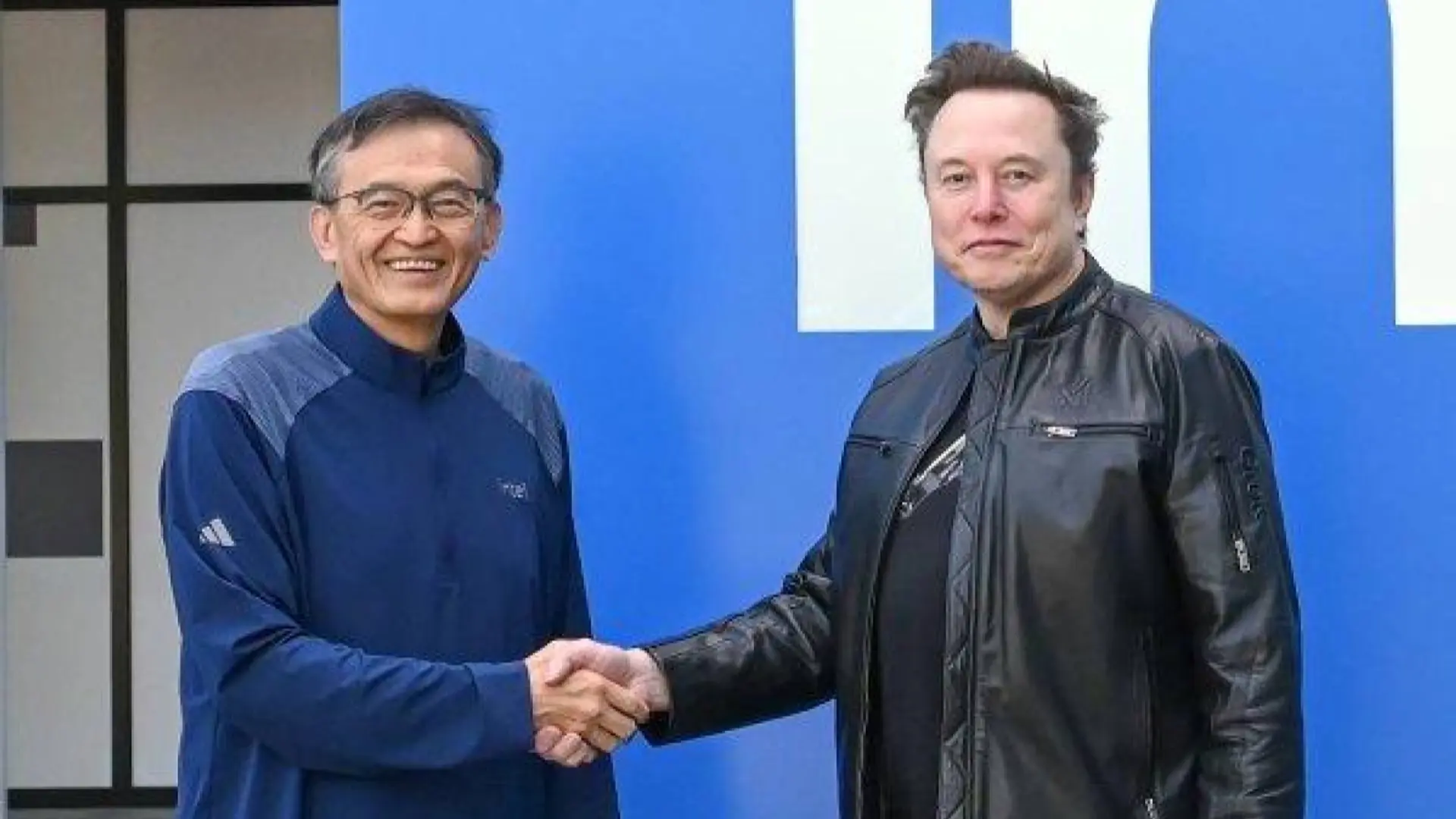

Intel’s latest move into Elon Musk’s Terafab project is more than a simple tech partnership especially for the erstwhile undisputed leader of the semiconductor industry.
The company said it would join Musk’s chipmaking plan with SpaceX, Tesla and xAI, and that its role would help speed up a project aimed at producing vast volumes of advanced compute for artificial intelligence (AI) and robotics.
The idea is pitched as a huge chip complex with a target of roughly one terawatt of compute a year, which is an enormous measure of processing capacity.
“Our ability to design, fabricate, and package ultra-high-performance chips at scale will help accelerate Terafab’s aim to produce 1 TW/year of compute to power future advances in AI and robotics,” Intel said in a post on social media platform X.
Terafab is best understood as Musk’s attempt to solve a supply problem. In November 2025 he said Tesla would probably need a gigantic chip fab and publicly suggested that Intel might be worth discussing as a partner.
The billionaire entrepreneur also said Tesla was designing its fifth generation AI chip, known as AI5, for autonomous driving, and that even the best case supply from outside manufacturers would not be enough. Last month, he said Tesla, working with SpaceX, would build two advanced chip factories in Austin, one for cars and humanoid robots and the other for AI data centres in space.

Intel’s presence matters because the company is trying to prove that it can be more than a maker of its own branded processors. Lip-Bu Tan, appointed chief executive officer in March 2025, has said Intel must become more financially disciplined and refocus on its foundry business, which means making chips for other companies, not just itself.
Intel Foundry is still said to have posted a large operating loss in 2025, even as Intel said demand for its processors was improving and the company was preparing its 18A manufacturing technology for possible external customers.
That is why the Terafab deal matters for Intel’s comeback story. NVIDIA and AMD have dominated the AI narrative, while Intel has spent years trying to regain momentum in both performance and manufacturing.
A Musk partnership does not erase those gaps, but it gives Intel something it badly needs, which is a prominent customer tied to one of the most ambitious compute plans in the industry.
The agreement could reportedly boost investor confidence because it shows Intel can support very large customers on critical projects, while its shares rose after the announcement.
While the partnership offers Intel a chance to show that its manufacturing expertise still matters in the AI era, for Tesla, SpaceX and xAI it means reducing reliance on outside suppliers and tailoring silicon more closely to their own software and hardware.
It is not an isolated deal, but part of a wider shift where control over compute, how chips are designed, manufactured and deployed, has become a central strategic concern in technology.
Recent partnerships show this, from Microsoft working with Intel on AI chip manufacturing, to Amazon and Google exploring advanced packaging with the same firm, and even NVIDIA reportedly considering selective collaboration despite being a rival. Alongside these, Apple has been diversifying its manufacturing base beyond TSMC.
Feature image: Intel CEO Lip-Bu Tan with Elon Musk, Founder, SpaceX